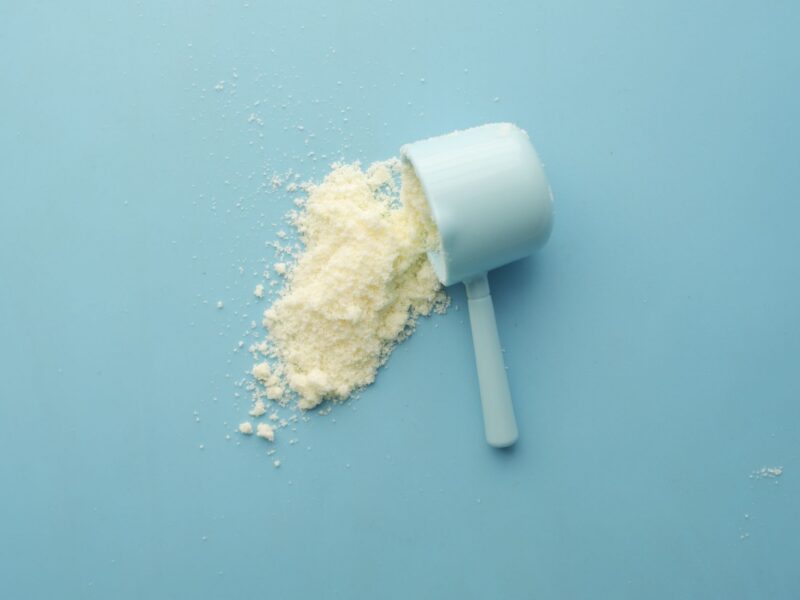

Flip over a tub of protein powder and the sodium line often reads higher than people expect. A single scoop can deliver anywhere from 50 to more than 300 milligrams of sodium, and flavored or blended formulas tend to sit at the top of that range. For most healthy adults this barely registers. For a smaller group of people, it matters enough to change which product ends up in the cabinet.
Why Sodium Is in Protein Powder at All
Sodium is not an accidental contaminant. Manufacturers add sodium containing ingredients on purpose, and the processing itself introduces more. There are three main reasons it shows up.
- Processing residue. Whey and casein are separated from milk using acids and bases. Sodium hydroxide is a common pH adjuster, and sodium bicarbonate is sometimes used to neutralize the final product. Traces remain in the finished powder.
- Flavor and texture. Sodium sharpens sweetness and rounds out flavor, which is why chocolate and salted caramel varieties often carry more than plain unflavored options. Salt also improves how the powder dissolves and feels on the tongue.
- Functional additives. Ingredients like sodium chloride, disodium phosphate, and sodium caseinate serve as emulsifiers or stabilizers that keep the mix smooth and shelf stable.
Plant based powders are not automatically lower. Some pea and soy isolates are processed with sodium heavy steps, and many are flavored aggressively to mask the base taste. The source of the protein tells you less than the label does. Diet style claims work the same way, so it helps to know what a paleo label on a tub actually covers before treating it as a shortcut to a cleaner ingredient list.
How Much Sodium Is Too Much
Context is everything here. The daily numbers most health bodies use as reference points put a single scoop in perspective. The American Heart Association recommends no more than 2,300 milligrams of sodium per day for most adults, and an ideal limit closer to 1,500 milligrams for people with elevated blood pressure. The Centers for Disease Control and Prevention reports that the average American already takes in roughly 3,400 milligrams per day, well above either target.
Against that backdrop, a 200 milligram scoop is a small slice of the daily budget for most people. But the picture changes if you drink two shakes a day, add a scoop to oatmeal, or are already close to a medically imposed limit. Sodium adds up quietly across a day, and a supplement you take specifically for health should not be an unexamined contributor.
The United States uses a standard threshold for what counts as low. Under FDA labeling rules, a product can be called low sodium only if it contains 140 milligrams or less per serving. Anything marketed as low sodium should meet that bar, and you can hold a label to it.
Who Actually Needs a Low Sodium Version
Most people do not need to hunt for a special formula. A few groups genuinely benefit.
- People managing high blood pressure. Reducing sodium is one of the more reliable dietary levers for lowering blood pressure, so every source counts when you are working toward a tight target. Stimulants warrant the same scrutiny, which is why some people in this group end up reaching for a gentler pre workout formula as well.
- People with kidney disease. Impaired kidneys clear sodium less efficiently, and clinicians often set strict daily limits. Protein intake itself is frequently managed in these cases, so the powder deserves a close look.
- People with heart failure. Sodium drives fluid retention, and restriction is a standard part of management for many patients.
- High volume users. If shakes are a daily habit or you use multiple scoops, even a moderate per serving number becomes meaningful over weeks.
If you fall into a clinical category, this is a conversation to have with your doctor or a registered dietitian rather than a decision to make from a label alone. For everyone else, sodium is one factor among many and rarely the deciding one.
What to Look For on the Label
Finding a genuinely low sodium powder is a matter of reading carefully rather than trusting the front of the tub. Marketing language on the front means little without the numbers on the back.
- Check sodium per serving, then per scoop you actually use. If the serving is two scoops and you use one, halve the number. If you use two, the printed figure stands.
- Favor unflavored or lightly flavored options. These consistently carry less added sodium than dessert style flavors.
- Choose whey isolate or a clean plant isolate. Isolates are more filtered than concentrates and often, though not always, lower in sodium. If dairy upsets your stomach, you can skip whey and lean on one of the plant based picks built for people who cannot tolerate it.
- Scan the ingredient list for sodium words. Sodium chloride, sodium caseinate, and disodium phosphate all push the total up.
- Watch the mixers. Milk, a salted nut butter, or a sports drink base can add more sodium than the powder itself.
| Type | Typical sodium per scoop | Notes |
|---|---|---|
| Unflavored whey isolate | Low to moderate | Often the leanest starting point |
| Flavored whey concentrate | Moderate to high | Added salt for taste and texture |
| Pea or soy isolate | Variable | Depends heavily on flavoring and processing |
| Meal replacement blends | High | Extra additives and stabilizers |
The Practical Takeaway
Low sodium protein powder is a real need for a specific set of people and a non issue for most gym goers. The useful habit is simply reading the sodium line the same way you already read the protein and calorie lines, then judging it against the rest of your day rather than in isolation. Sodium is one number among several worth checking before a supplement earns a spot in your routine, much like weighing whether an ingredient is even worth the premium price. We take a similar label first approach when asking whether organic creatine is worth paying more for, and the same skepticism applies to which pre workout ingredients actually affect you.
If you are healthy and active, pick the powder you enjoy and will use consistently. If you are managing blood pressure, kidney function, or heart health, treat the sodium figure as a real input, aim for products at or under the 140 milligram low sodium threshold, and bring your total intake into a conversation with your clinician.