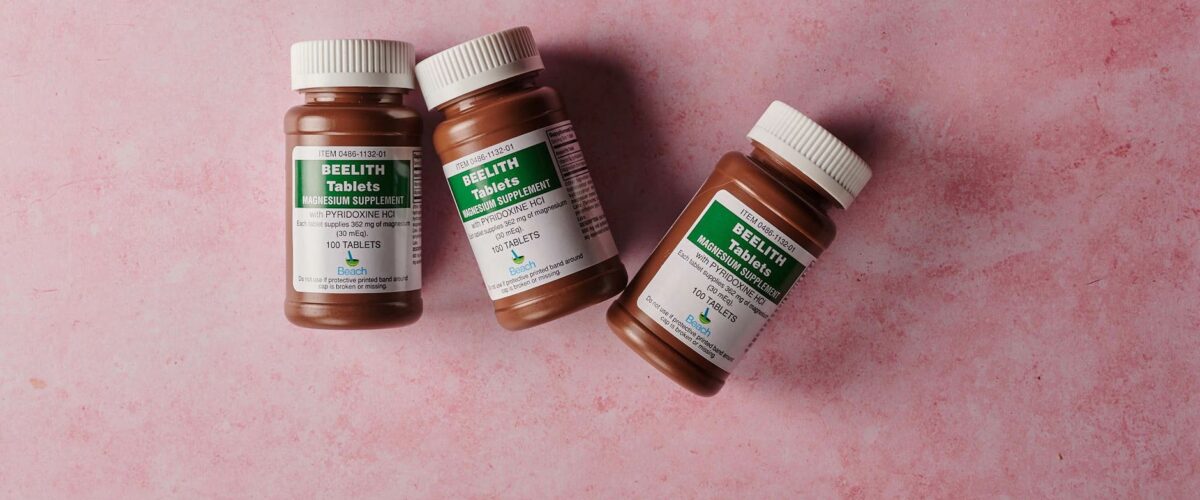

Two magnesium supplements can both say 500 mg on the front of the bottle and deliver very different amounts of usable mineral. The number on the label often refers to the weight of the entire compound, not the magnesium inside it. The molecule that magnesium is bound to changes two things at once: how much elemental magnesium is in each capsule, and how readily your gut absorbs it.
Elemental magnesium is the number that matters
Magnesium is never sold as a pure metal. It is always paired with something, whether that is oxide, citrate, glycine, or malate. Magnesium oxide is a small, light partner, so roughly 60 percent of the compound’s weight is magnesium itself. Glycine is a much bigger molecule, so magnesium glycinate is only around 14 percent magnesium by weight. That means a 500 mg dose of oxide contains far more elemental magnesium than a 500 mg dose of glycinate.
This is where the story gets counterintuitive. Oxide packs the most magnesium per capsule and is also the least useful form for most people, because very little of it crosses the intestinal wall. Reputable labels state elemental magnesium separately, usually as something like magnesium glycinate 1,000 mg, providing 140 mg elemental magnesium. If a label does not tell you the elemental amount, you cannot compare it to anything.
How the common forms compare
| Form | Approximate elemental magnesium | Absorption | Typical use |
|---|---|---|---|
| Oxide | ~60 percent | Poor | Cheap bulk filler, occasional laxative, antacid |
| Citrate | ~11 to 16 percent | Good | General repletion, mild constipation relief |
| Glycinate (bisglycinate) | ~14 percent | Good | General repletion when the gut is sensitive |
| Malate | ~15 percent | Good | General repletion, often marketed for fatigue |
| Chloride | ~12 percent | Good | Repletion, topical sprays and flakes |
| L-threonate | ~8 percent | Good | Marketed for cognition, thin human evidence |
| Sulfate (Epsom salts) | ~10 percent | Poor orally | Baths, medical use under supervision |
What the absorption research actually shows
The best evidence here is unglamorous and fairly old. A comparison of commercial magnesium preparations published in Magnesium Research found that magnesium oxide was absorbed substantially less well than magnesium chloride, lactate, or aspartate, based on urinary excretion after supplementation. A separate randomized double blind trial reported that magnesium citrate raised markers of magnesium status more effectively than magnesium oxide or an amino acid chelate over 60 days. The National Institutes of Health Office of Dietary Supplements summarizes the pattern the same way: forms that dissolve well in liquid tend to be more completely absorbed than less soluble forms such as oxide and sulfate.
Two caveats keep this honest. The studies involved are small, and they measure surrogate markers such as serum and urinary magnesium rather than clinical outcomes. And absorption is not fixed. When your intake is low, your intestines pull a higher fraction of what arrives. Dietary magnesium absorption sits somewhere in the range of 30 to 40 percent overall, and that percentage rises when stores are depleted. So a poorly absorbed form is not useless, it is simply inefficient and more likely to leave unabsorbed magnesium in the colon, where it draws in water and loosens stools.
Matching the form to the goal
General repletion
Glycinate, citrate, malate, and chloride are all reasonable. Choose on tolerance and price rather than on marketing claims. Glycinate is the usual pick for people who get loose stools from citrate.
Constipation
Here the poor absorption becomes the point. Citrate and oxide both work osmotically. Oxide is the cheapest option and is genuinely useful in this narrow context, which is a good reminder that a form being badly absorbed is a property, not a defect.
Sleep and stress
Glycinate is heavily marketed for sleep, partly because glycine itself has some sedative research behind it. The direct evidence for magnesium is thin. A frequently cited trial in older adults with insomnia found improvements in sleep time and sleep efficiency with 500 mg of magnesium daily, but it enrolled fewer than 50 participants. Treat magnesium as a plausible, low risk addition to sleep hygiene rather than a sleep aid in its own right.
Cognition
Magnesium L-threonate reaches the market on the strength of animal work showing raised brain magnesium levels. Human trials are few and small. It is also the most expensive form per milligram of elemental magnesium. This is the same evidence grading problem that shows up across the category, much like the one we worked through in our review of which joint supplements have real trial data behind them.
Dosing, timing, and the upper limit
The recommended dietary allowance for adults is roughly 400 to 420 mg per day for men and 310 to 320 mg per day for women, counting food. Most supplements provide 100 to 200 mg of elemental magnesium per serving, which is intended to close a gap rather than supply the whole requirement.
There is a specific tolerable upper intake level of 350 mg per day for supplemental magnesium in adults. That limit does not apply to magnesium from food, because healthy kidneys clear dietary excess easily. It exists because supplemental magnesium salts cause diarrhea, cramping, and nausea well before they cause anything serious.
Timing is flexible. Magnesium works through tissue stores rather than an acute effect, so consistency beats scheduling. The same logic applies as it does to taking creatine every day including rest days. If a single dose upsets your stomach, split it. Taking it with food improves tolerance.
When to check with a clinician first
- Reduced kidney function. Impaired excretion is the main route to genuinely high blood magnesium, and supplements should not be self prescribed.
- Certain antibiotics. Magnesium binds tetracyclines and quinolones in the gut. Separate the doses by several hours.
- Bisphosphonates. Same problem, same solution. Space them out.
- Long term proton pump inhibitors. Extended use has been linked to low blood magnesium, so testing rather than guessing makes sense.
- Diuretics. Some increase magnesium loss, others reduce it. The direction depends on the drug class.
The practical summary
Skip oxide unless you want the laxative effect. Pick citrate, glycinate, malate, or chloride based on your gut. Read the elemental magnesium figure and ignore the compound weight on the front of the bottle. Keep the supplemental dose near or below 350 mg of elemental magnesium daily unless a clinician says otherwise, and remember that leafy greens, legumes, nuts, seeds, and whole grains still carry most of the load.
References
- National Institutes of Health, Office of Dietary Supplements. Magnesium: Fact Sheet for Health Professionals.
- Firoz M, Graber M. Bioavailability of US commercial magnesium preparations. Magnesium Research. 2001.
- Walker AF, et al. Mg citrate found more bioavailable than other Mg preparations in a randomised, double-blind study. Magnesium Research. 2003.
- Abbasi B, et al. The effect of magnesium supplementation on primary insomnia in elderly: A double-blind placebo-controlled clinical trial. Journal of Research in Medical Sciences. 2012.