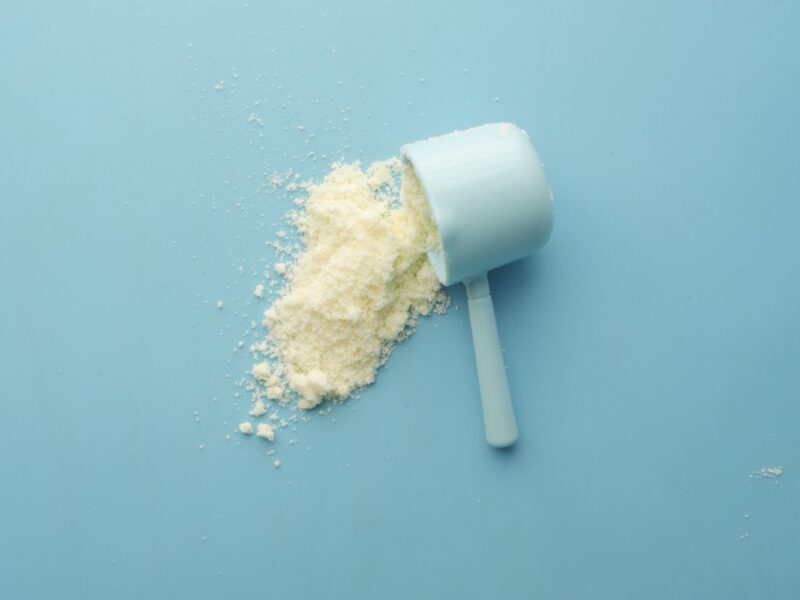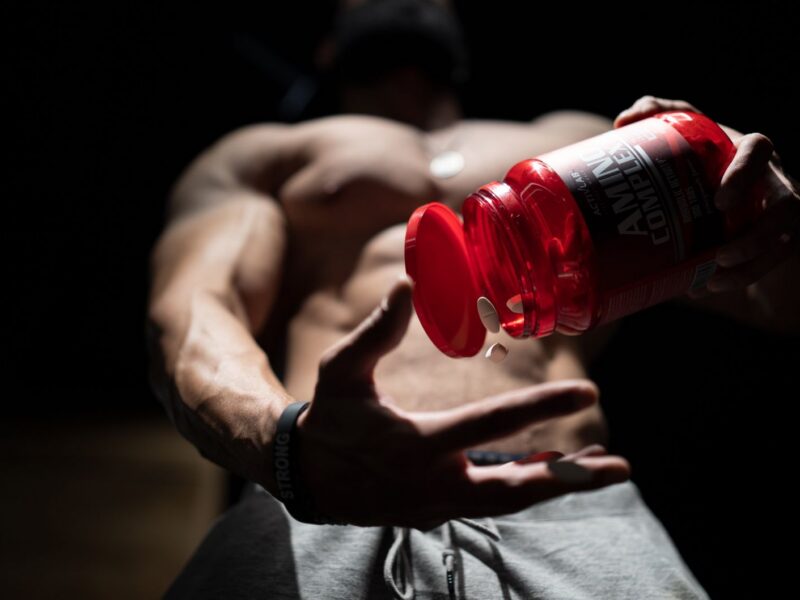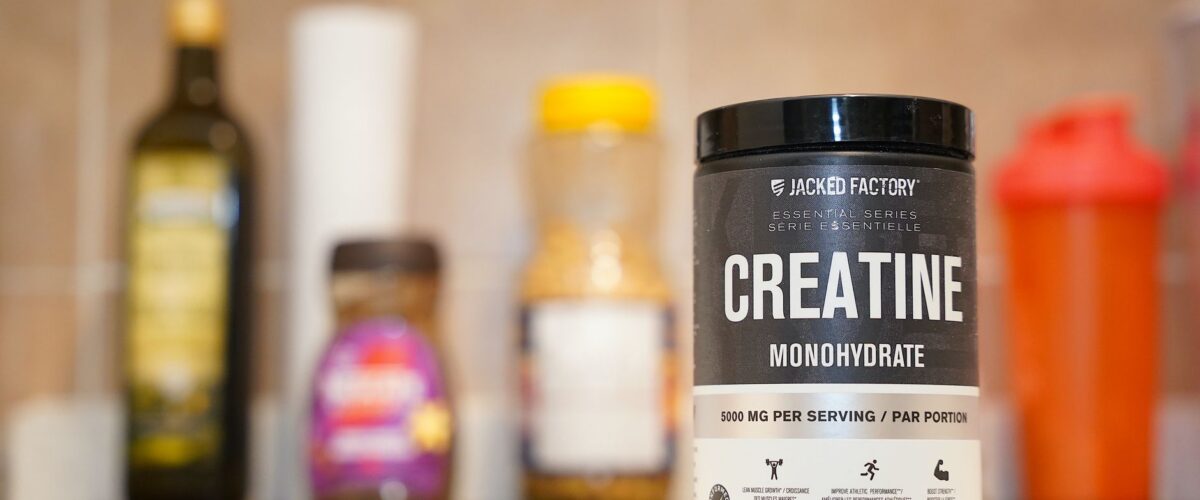

Dry scooping means tipping a scoop of powdered creatine straight into your mouth and swallowing it, usually chasing it with a mouthful of water afterward. It became a visible trend because it looks intense on camera and because a persistent belief circulates that skipping the water gets the creatine into your muscles faster. Neither the physiology nor the risk profile supports it.
Dry Scooping Does Not Improve Absorption
Creatine monohydrate is already close to fully bioavailable when taken orally with fluid. It dissolves in the stomach, crosses the intestinal wall, enters the bloodstream, and is pulled into muscle cells by a sodium dependent transporter called CreaT. That transporter is the bottleneck, not the speed at which powder leaves your mouth.
Here is the part that undermines the whole premise: creatine only works once your muscle stores are saturated, and saturation is a matter of weeks of consistent intake, not minutes. The International Society of Sports Nutrition position stand on creatine describes saturation protocols measured in days and maintenance measured in months. Whether a given dose reaches your bloodstream ten minutes sooner has no measurable bearing on muscle creatine content, strength, or training output.
If anything, dry scooping works against absorption. Powder that sticks to your tongue, teeth, and the roof of your mouth never gets swallowed. Powder that clumps in the back of your throat may get coughed back out. You cannot dose accurately when part of your scoop ends up on the gym floor.
The Real Risks Are Mechanical, Not Chemical
Creatine monohydrate itself has one of the strongest safety records in sports nutrition. The National Institutes of Health Office of Dietary Supplements notes that creatine has been studied extensively in healthy adults with few adverse effects at standard doses. The problem with dry scooping is not the compound. It is the delivery method.
Choking and Coughing
Fine powder hitting the back of the throat reliably triggers a gag or cough reflex. That reflex is protective, but it is also what turns a mouthful of dry powder into a scattering event. Most people who dry scoop have had at least one violent coughing fit from it.
Aspiration
This is the risk worth taking seriously. If you inhale while powder is sitting loose in your mouth, some of it can enter the airway instead of the esophagus. Inhaling foreign material into the lungs can cause irritation and, in more serious cases, aspiration pneumonia, an infection or inflammatory response to material that does not belong in the lungs. The risk is small in any single instance. It is not zero, and it scales with how often you do it and how hard you are breathing at the time.
Esophageal Irritation
Dry powder scraping down an unlubricated esophagus can cause a burning or scratching sensation. It usually resolves quickly, but it is an entirely self inflicted discomfort with no upside.
The Pre-Workout Confound
Much of the alarm around dry scooping comes from pre-workout formulas rather than plain creatine. Those often contain 200mg or more of caffeine per scoop, plus beta-alanine, and delivering a concentrated stimulant dose without dilution is a meaningfully different proposition. If stimulant load is the issue for you, that is a formulation question rather than a scooping question, and it is worth reading our breakdown of what to use in place of beta-alanine.
Why People Do It Anyway
Three reasons, roughly in order of honesty:
- Content. Dry scooping is visually dramatic. Someone choking down powder and grimacing performs well on social platforms. Someone stirring a glass of water does not.
- Convenience. No shaker, no cleanup. This is a genuine motivation and there are better solutions for it.
- Belief in urgency. The idea that the supplement needs to hit right now, before the set. This one is simply mistaken for creatine, which works on a saturation model rather than an acute one.
The urgency belief is the same misunderstanding behind most creatine timing anxiety. Once you understand that creatine is a reservoir you fill rather than a switch you flip, questions about the exact moment of ingestion mostly dissolve. We covered the evidence on that in detail in our look at whether creatine timing actually matters.
What to Do Instead
| Goal | Better approach |
|---|---|
| Skip the shaker | Stir 3g to 5g into any drink you already have. Creatine monohydrate is nearly tasteless. |
| Powder will not dissolve | Use warm water. Solubility improves with temperature. Undissolved grit at the bottom still counts if you swallow it. |
| Hate measuring | Use capsules or gummies. Slightly more expensive per gram, functionally identical. |
| Forget doses | Attach it to an existing daily habit. Consistency beats timing by a wide margin. |
| Want faster saturation | Load with roughly 20g per day split into four doses for five to seven days, then drop to 3g to 5g daily. |
One practical note on hydration. Creatine pulls water into muscle cells, and inadequate fluid intake alongside supplementation is a plausible contributor to some of the side effects people report. If you are getting head pain after starting creatine, our piece on creatine and headaches walks through the likely mechanisms. Dry scooping actively encourages under-drinking, which is the opposite of what you want.
A Note on Product Quality
Dietary supplements in the United States are not approved by the Food and Drug Administration before they reach shelves. The FDA’s guidance for consumers makes clear that manufacturers carry primary responsibility for safety and labeling. That matters more than scooping technique. Look for creatine monohydrate that has been tested by an independent certifier such as NSF or Informed Sport, and be skeptical of exotic forms marketed as superior to monohydrate. Monohydrate remains the most studied and the cheapest.
The Verdict
Dry scooping creatine is not going to hurt most people most of the time. But it delivers no benefit whatsoever, it makes your dosing less accurate, and it carries a small but genuine risk of choking or inhaling powder. A supplement whose entire mechanism depends on consistent daily intake over weeks has nothing to gain from a delivery method optimized for looking tough. Stir it into water and move on.
References
- Kreider RB, et al. International Society of Sports Nutrition position stand: safety and efficacy of creatine supplementation in exercise, sport, and medicine. Journal of the International Society of Sports Nutrition. 2017.
- National Institutes of Health, Office of Dietary Supplements. Dietary Supplements for Exercise and Athletic Performance: Fact Sheet for Health Professionals.
- MedlinePlus, U.S. National Library of Medicine. Aspiration Pneumonia.
- U.S. Food and Drug Administration. Questions and Answers on Dietary Supplements.
- PubMed. Published literature on dry scooping and pre-workout supplement use behaviors. National Library of Medicine.