Walk down any supplement aisle and the joint section makes big promises: rebuild cartilage, erase stiffness, restore the knees of your twenties. Most of these products lean on a handful of the same ingredients, but the quality of evidence behind each one varies enormously. Some have been tested in large government-funded trials. Others ride almost entirely on marketing and a few small studies. Here is how the most common joint supplements actually stack up.
How to Read the Evidence
Joint pain, especially from osteoarthritis, is notoriously responsive to placebo. People expect relief, and reported pain often drops even in the control group of a trial. That is why a single positive study means little. What matters is whether a supplement beats placebo consistently across well-designed, randomized trials. It also matters what kind of joint problem you have. Osteoarthritis (wear-related cartilage loss) and rheumatoid arthritis (an autoimmune condition) respond to different things, and a supplement that helps one may do nothing for the other.
Glucosamine and Chondroitin: Popular, but Modest
Glucosamine and chondroitin are the classic joint duo, usually sold together. They are natural components of cartilage, and the theory is that supplementing them supports cartilage maintenance. The theory is more convincing than the results.
The largest independent test was the Glucosamine/chondroitin Arthritis Intervention Trial (GAIT), a study funded by the U.S. National Institutes of Health. Across the full group of participants with knee osteoarthritis, neither glucosamine nor chondroitin, alone or combined, beat placebo for overall pain relief. A subgroup with moderate to severe pain saw a possible benefit from the combination, but that finding was not strong enough to be conclusive. The National Center for Complementary and Integrative Health summarizes the broader body of research the same way: these supplements do not appear to reliably reduce pain or slow joint damage for most people.
Evidence grade: weak to moderate. Generally safe and well tolerated, so a time-limited trial is reasonable, but do not expect much. Give it two to three months, and if nothing changes, stop.
Fish Oil (Omega-3s): Best Case for Inflammatory Joints
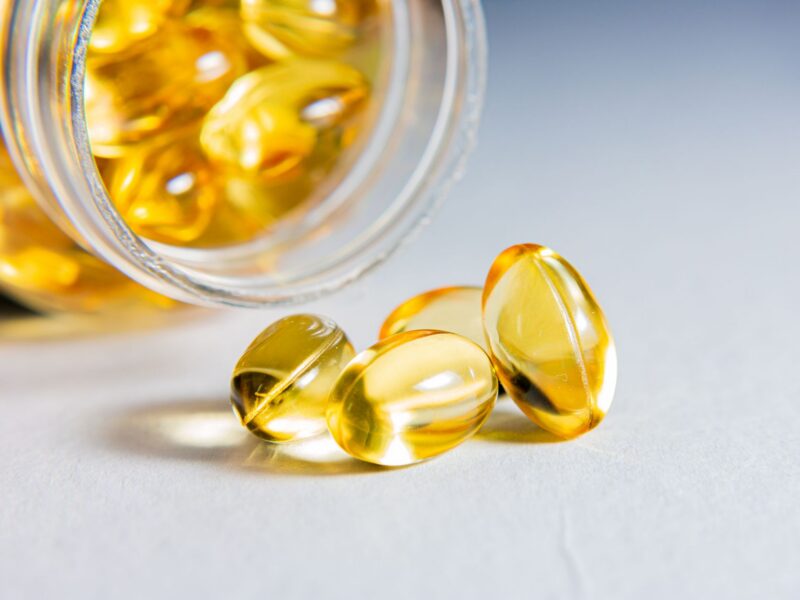
The long-chain omega-3 fatty acids in fish oil, EPA and DHA, have genuine anti-inflammatory effects. The strongest evidence is not in osteoarthritis but in rheumatoid arthritis, where higher-dose fish oil has been shown to reduce joint tenderness and morning stiffness and, in some studies, to reduce the need for anti-inflammatory painkillers.
For osteoarthritis the picture is thinner, but the general anti-inflammatory profile and the well-documented cardiovascular benefits make fish oil one of the more defensible choices on this list. Doses used in inflammatory joint studies are typically higher than a standard capsule provides, often around two to three grams of combined EPA and DHA per day, so check the label rather than assuming one softgel is enough.
Evidence grade: moderate, strongest for rheumatoid arthritis.
Collagen: Promising but Not Proven
Collagen peptides (often labeled hydrolyzed collagen) have become the trendy joint supplement, partly on the back of their popularity for skin. A handful of randomized trials suggest that daily collagen peptides may modestly reduce activity-related joint pain in athletes and in people with mild osteoarthritis. The effect sizes are small, the studies are often industry-funded, and the mechanism is still debated, since collagen is broken down into amino acids during digestion rather than delivered intact to your joints.
Collagen is essentially a protein, so if you are already eating enough total protein you may be paying a premium for what is functionally a specialized amino acid supplement. The same logic that applies to choosing any protein product applies here, and it is worth reading labels carefully, as we cover in our guide to what to look for in a protein powder.
Evidence grade: weak to moderate, early but not unreasonable.
Boswellia: Quietly One of the Better Bets
Boswellia serrata, an extract from the frankincense tree, gets far less marketing than glucosamine but has a more interesting evidence base for osteoarthritis. Its active boswellic acids inhibit inflammatory enzymes, and several small-to-medium randomized trials have reported reductions in pain and improvements in function for knee osteoarthritis, sometimes within a few weeks. The trials are not large, and product standardization varies, but the direction of the evidence is more consistent than for glucosamine.
Evidence grade: moderate, underrated. Look for extracts standardized to a stated percentage of boswellic acids.
Curcumin: Real Effect, Real Absorption Problem
Curcumin, the active compound in turmeric, has anti-inflammatory properties, and several trials in knee osteoarthritis have found it can reduce pain to a degree comparable with some over-the-counter anti-inflammatories in short studies. The catch is absorption: plain curcumin is poorly taken up by the body, which is why effective products pair it with piperine (black pepper extract) or use a specially formulated delivery system. Standard culinary turmeric will not deliver a therapeutic dose.
Evidence grade: moderate, if you use a properly formulated product.
The Quick Reference Table
| Supplement | Best for | Evidence grade |
|---|---|---|
| Glucosamine and chondroitin | Knee osteoarthritis | Weak to moderate |
| Fish oil (omega-3) | Rheumatoid arthritis, general inflammation | Moderate |
| Collagen peptides | Mild osteoarthritis, active joints | Weak to moderate |
| Boswellia serrata | Knee osteoarthritis | Moderate |
| Curcumin | Knee osteoarthritis | Moderate (with absorption aid) |
How to Actually Test One
Whatever you try, treat it like an experiment. Pick one supplement rather than stacking several at once, so you can tell what is working. Take it consistently, since most of these need weeks of daily use to show any effect, and skipping days undermines the trial in the same way it does for other daily supplements we have written about, such as taking creatine every day rather than only on training days. Track your pain and stiffness with a simple weekly note. Give it eight to twelve weeks, then decide honestly whether it earned its place in your routine.
Supplements can help around the edges, but none of them rebuild a worn joint. Load management, strength training around the affected joint, maintaining a healthy weight, and talking to a clinician about persistent pain will always do more heavy lifting than a capsule. Use these products as a modest addition, not a replacement, and let the evidence, not the packaging, decide where your money goes.
References
- National Center for Complementary and Integrative Health. Glucosamine and Chondroitin for Osteoarthritis. NIH.
- Clegg DO, et al. Glucosamine, Chondroitin Sulfate, and the Two in Combination for Painful Knee Osteoarthritis. New England Journal of Medicine. 2006.
- Senftleber NK, et al. Marine Oil Supplements for Arthritis Pain: A Systematic Review and Meta-Analysis. Nutrients. 2017.
- Yu G, et al. Effectiveness of Boswellia and Boswellia Extract for Osteoarthritis Patients: A Systematic Review and Meta-Analysis. BMC Complementary Medicine and Therapies. 2020.
- National Center for Complementary and Integrative Health. Turmeric. NIH.