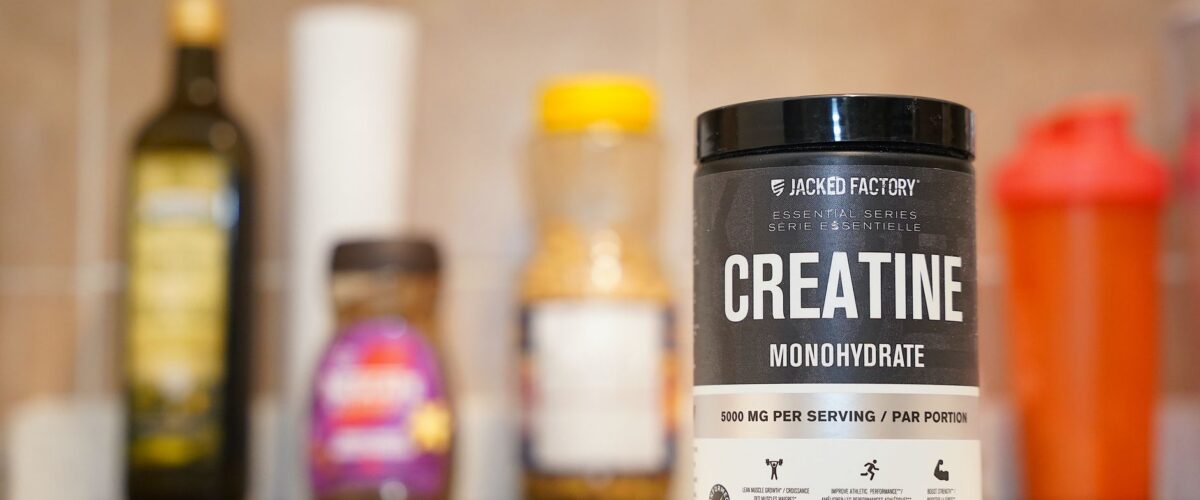
When people say creatine makes them “hold water,” they usually picture a softer, puffier look under the skin. The research points somewhere very different. Creatine does increase the total water your body carries, but the overwhelming majority of it is pulled into your muscle cells rather than pooling in the tissue just beneath the skin. That distinction changes how you should think about the scale, the mirror, and whether water retention is a downside at all.
Why Creatine Pulls In Water
Creatine is stored in muscle mostly as phosphocreatine, and it is an osmotically active molecule. That means when you load more creatine into a muscle cell, the cell draws in water to maintain its internal balance. This is not a side effect that happens to occur alongside the benefit. The extra intracellular water is part of how creatine works. A more hydrated, swollen muscle cell appears to signal for protein synthesis and creates a better environment for training adaptations over time.
Human muscle can hold a limited amount of creatine, and supplementation raises those stores by roughly twenty percent in most people. Early classic work by Hultman and colleagues established that muscle creatine content rises quickly with a loading protocol and stays elevated as long as you keep taking a daily maintenance dose. The water follows the creatine into the cell, which is why the earliest changes on the scale show up in the first week.
Intracellular vs Subcutaneous Water
This is the heart of the myth. There are two very different places water can sit.
- Intracellular water sits inside the muscle cell. This is where creatine drives water, and it is associated with a fuller, firmer looking muscle. It does not read as “puffy.”
- Subcutaneous water sits between the skin and the muscle. This is the smooth, soft bloat people worry about, and it is what makes definition disappear. Creatine is not what puts water here.
A study published in the Journal of Athletic Training measured total body water before and after creatine supplementation and found that while total body water and intracellular water increased, the proportion of fluid distributed between compartments did not shift in a way that suggested fluid pooling outside the cells. In plain terms, the water went where the creatine went. That is the opposite of the bloated look people fear.
What the Loading Phase Does
The loading phase is the reason creatine has a reputation for sudden water weight. A common protocol is around twenty grams per day, split into four servings, for five to seven days, followed by a maintenance dose of three to five grams per day. Loading saturates muscle creatine stores faster, and because water tracks creatine into the cell, most people see one to three pounds appear on the scale within that first week.
You do not have to load. Taking three to five grams per day from the start reaches the same muscle saturation, just over about three to four weeks instead of one. The trade off is simple.
| Approach | Daily dose | Time to full saturation | Early water weight |
|---|---|---|---|
| Loading phase | ~20 g for 5 to 7 days, then 3 to 5 g | About 1 week | Noticeable, fast |
| Steady dose | 3 to 5 g from day one | 3 to 4 weeks | Gradual, easy to miss |
If you dislike the idea of a rapid jump on the scale, skipping the loading phase spreads the same water gain across a month, which most people never notice.
Who Notices It Most
Not everyone responds the same way. People with naturally lower muscle creatine stores, often those eating little or no meat, tend to see a larger increase because they have more room to fill. Vegetarians and vegans frequently report a more pronounced early response for exactly this reason. Larger, more muscular individuals also carry more total muscle to saturate, so the absolute water gain can be greater even if the percentage change is similar.
Timing of your dose has very little to do with retention. Whether you take creatine in the morning, after training, or in the evening, saturation is what matters, not the clock. If you want the deeper reasoning on that, we covered it in our look at whether creatine timing actually changes results.
Is the Water a Problem?
For most goals, no. Intracellular water is part of the mechanism, not a cosmetic penalty. It contributes to the fuller muscle look many people are actually after, and it does not blur definition the way subcutaneous fluid does. According to the International Society of Sports Nutrition position stand, creatine monohydrate is one of the most studied and safe sports supplements available, and the water shift it causes is not linked to the bloated, soft appearance it is often blamed for.
A few practical points help keep expectations realistic:
- Weigh the trend over weeks, not the first few days. Early water weight is not fat gain.
- Keep your fluid intake steady. Creatine draws water into muscle, so staying well hydrated supports the process and can reduce the odds of minor stomach discomfort during loading. Falling short on fluids is also the most common reason a few people blame creatine for headaches.
- If you compete in a weight class sport, plan the timing of when you start so the initial gain does not surprise you near weigh in.
The “puffy” reputation comes from confusing two kinds of water. Once you separate what happens inside the cell from what happens under the skin, creatine’s fluid effect looks less like a drawback and more like part of why it works. If you are refining the rest of your stack, it is also worth understanding which pre workout ingredients are doing real work and which are just sensation.
References
- Powers ME, et al. Creatine Supplementation Increases Total Body Water Without Altering Fluid Distribution. Journal of Athletic Training. 2003.
- Kreider RB, et al. International Society of Sports Nutrition Position Stand: Safety and Efficacy of Creatine Supplementation. Journal of the International Society of Sports Nutrition. 2017.
- Hultman E, et al. Muscle Creatine Loading in Men. Journal of Applied Physiology. 1996.
- Antonio J, et al. Common Questions and Misconceptions About Creatine Supplementation. Journal of the International Society of Sports Nutrition. 2021.