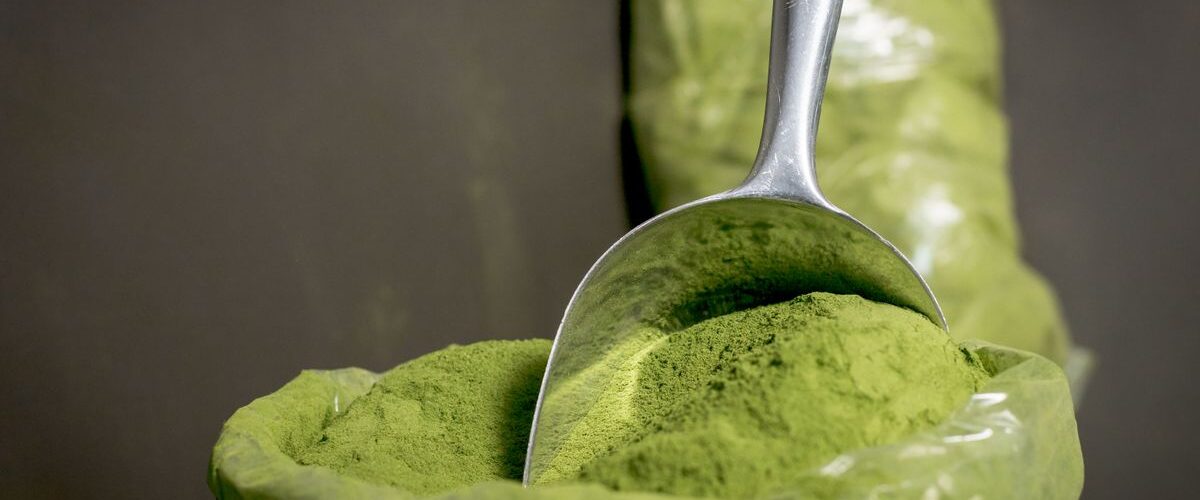
Green supplements have a branding problem. Every product in the category promises to be the one dense superfood your diet is missing, and the visual similarity between green powders makes it hard to tell what you are actually buying. Moringa and spirulina are two of the most common options in the aisle, and they share a reputation for being nutrient-dense plant supplements. That is roughly where the similarities end.
These are fundamentally different organisms, with different nutritional profiles, different mechanisms, and different evidence behind their most common health claims. Understanding the distinction matters if you are choosing between them rather than just buying whichever green powder is on sale.
What Each One Actually Is
Moringa oleifera is a tree. The supplement comes from its dried leaves, which are ground into powder or compressed into capsules. It is a terrestrial plant, grown in tropical regions across Africa, South Asia, and parts of Central America. The leaves have been used in traditional medicine for centuries, and the modern supplement industry has adapted them into a standardized product.
Spirulina is a cyanobacterium. It is technically not a plant at all, but a photosynthetic microorganism that grows in both freshwater and saltwater environments. It has a long history as a food source, dating back to the Aztecs, and it is now cultivated in controlled environments for supplement production. Spirulina is typically sold as tablets, powder, or integrated into green drink mixes.
The difference matters because it determines what you are getting nutritionally. A land plant and a microorganism do not store the same compounds in the same concentrations.
Nutritional Profile: Head to Head
Here is where moringa and spirulina diverge most clearly:
| Nutrient (per 3g serving) | Moringa Leaf | Spirulina | Winner |
|---|---|---|---|
| Protein | ~2g | ~2g | Tie |
| Iron | ~4mg | ~2mg | Moringa |
| Vitamin C | ~15mg | ~1mg | Moringa |
| Calcium | ~200mg | ~15mg | Moringa |
| Vitamin B12 | Trace | ~3mcg | Spirulina |
| Gamma-linolenic acid (GLA) | Trace | ~30mg | Spirulina |
| Chlorophyll | Moderate | High | Spirulina |
| Phycocyanin | Absent | Present | Spirulina |
Moringa dominates on minerals and vitamin C. It is one of the densest plant sources of iron and calcium available, which is why it shows up frequently in recommendations for vegetarians and people with micronutrient gaps. Spirulina has the edge on B12 (though the form is not identical to the B12 in animal foods) and contains unique compounds like phycocyanin, the blue pigment that gives spirulina its distinctive color and is responsible for many of its anti-inflammatory effects.
What the Research Supports
Both supplements have a body of clinical evidence behind them, but the quality and focus of that evidence differ.
Moringa Evidence
Moringa research has concentrated on metabolic health. Multiple trials show that moringa leaf powder at 1 to 3 grams daily can reduce fasting blood sugar in diabetic and pre-diabetic populations. There is also moderate evidence for anti-inflammatory effects, with studies showing reductions in C-reactive protein and tumor necrosis factor alpha. That anti-inflammatory angle is why moringa sometimes comes up in conversations about which joint supplements are actually worth taking, though the direct evidence there is thinner. The micronutrient density is well established and not seriously disputed.
The weakness in moringa research is sample size. Many of the positive studies are small, often under 100 participants, and the duration is typically six to twelve weeks. The results are consistent enough to be credible, but they do not carry the weight of large-scale, long-term trials.
Spirulina Evidence
Spirulina has a broader research base, partly because it has been studied for longer in Western scientific literature. The evidence supports modest improvements in lipid profiles, with several trials showing reductions in total cholesterol and LDL cholesterol at doses of 1 to 8 grams daily. There is also evidence for blood pressure reduction, particularly in people with normal to slightly elevated readings. The anti-inflammatory and antioxidant effects of phycocyanin are well documented in both laboratory and human studies.
Spirulina’s research weakness is dosing inconsistency. Studies use wildly different amounts, from 1 gram to 10 grams daily, making it difficult to establish clear dose-response relationships. The quality of the evidence is generally higher than moringa’s, but the practical guidance on how much to take is less precise.
The Practical Differences
Beyond the nutritional comparison, the two supplements differ in ways that affect daily use:
| Factor | Moringa | Spirulina |
|---|---|---|
| Taste | Earthy, slightly bitter, similar to green tea | Strongly marine, can be unpleasant in large amounts |
| Digestibility | Well tolerated, mild laxative effect at high doses | Can cause nausea or stomach upset in sensitive people |
| Contamination risk | Low, if sourced from reputable growers | Higher, if not tested for heavy metals and microcystins |
| Allergen profile | Generally safe, rare allergic reactions | Contraindicated in people with autoimmune conditions or phenylketonuria |
| Form factor | Capsules, powder, tea | Tablets, powder, blended into smoothies |
Spirulina’s contamination issue is worth emphasizing. Because it is a photosynthetic organism grown in open or semi-open water systems, it can accumulate heavy metals and produce microcystins, which are liver toxins, if the growing environment is not carefully controlled. Third-party testing for these contaminants is not optional for spirulina, it is a safety requirement. Moringa does not carry this risk in the same way, though heavy metal testing is still good practice for any plant supplement.
Who Should Choose Moringa
Moringa is the stronger choice for people who are primarily addressing micronutrient gaps. If you are low on iron, calcium, or vitamin C, moringa delivers those minerals in meaningful amounts per serving. It is also the better option for people focused on blood sugar management, given the clinical evidence in diabetic populations. The milder taste and lower contamination risk make it a more straightforward daily supplement for people who do not want to think about sourcing quality as carefully.
Who Should Choose Spirulina
Spirulina makes more sense for people focused on cardiovascular markers, particularly cholesterol and blood pressure. The phycocyanin content provides antioxidant and anti-inflammatory benefits that moringa cannot match. It is also the better choice for people who want B12 from a plant source, though it is worth noting that spirulina contains pseudovitamin B12, which is not biologically active in humans. If you are relying on spirulina as your sole B12 source, you may need supplementation anyway.
Can You Take Both?
Yes. Moringa and spirulina do not conflict, and their nutritional profiles complement each other rather than overlap. Moringa covers the mineral and vitamin C side, while spirulina contributes phycocyanin, GLA, and the unique anti-inflammatory compounds specific to cyanobacteria. Some green drink blends combine both, though the doses in those products are often too low to match what the clinical studies used. If you want the research-supported benefits of both, separate supplementation at proper doses is more reliable than a combined product.
Our Pick: Moringa Pure Capsules
If you are choosing between the two, moringa offers the more versatile nutritional profile for most people. Moringa Pure delivers 800 mg of pure Moringa Oleifera per two-capsule serving, with no fillers or binders. Third-party tested, vegan, and made in the USA. This is the moringa product we trust for research-supported dosing.
The Takeaway
Moringa and spirulina are both legitimate supplements with real evidence behind them, but they serve different purposes. Moringa is the mineral-dense, blood-sugar-focused option with a milder taste and simpler sourcing. Spirulina is the cardiovascular, anti-inflammatory option with unique compounds like phycocyanin but higher contamination risk and a stronger taste that not everyone tolerates. The choice depends on what you are trying to address, not which one is objectively better. If the decision feels unclear, moringa is the safer default for general nutritional support, and spirulina is a targeted addition for specific health goals.
References
- Stohs SJ, Hartman MJ. Review of the safety and efficacy of Moringa oleifera. Phytotherapy Research. 2015.
- Ranasinghe RASS, et al. Effects of Moringa oleifera on glycaemic control and insulin sensitivity in type 2 diabetes. Journal of Ethnopharmacology. 2018.
- Serban C, et al. Effect of Spirulina supplementation on plasma lipid profile: a systematic review and meta-analysis of randomized controlled trials. European Review for Medical and Pharmacological Sciences. 2016.
- Mazokopakis EE, et al. The hypolipidaemic effects of Spirulina in patients with hypercholesterolaemia. Phytotherapy Research. 2014.
- Gopalakrishnan L, Doriya K, Kumar DS. Moringa oleifera: A review on nutritive importance and its medicinal application. Food Science and Human Wellness. 2016.